Northwestern names three winners in its AI investigative challenge
The contest drew more than 60 teams and produced workflows for lead generation, document indexing and modular verification, all built around congressional lobbying data.
Northwestern’s Generative AI in the Newsroom initiative has named three winners of its inaugural Agentic AI Investigative Challenge, a contest that drew more than 60 teams and asked participants to use Claude Code to examine congressional lobbying data. The top submissions came from Emma Bingham and Ian Clester, Ulysses Pascal, and Nataliia Kobylchak, with prizes of $5,000, $2,500 and $1,000.
The challenge grew out of Northwestern’s effort to develop responsible practices for generative AI in news production, which launched in April 2024 with a $1 million grant from the John S. and James L. Knight Foundation through its Press Forward program. The contest opened on 15 May and closed on 15 July, and judging was to be finalised by 15 August. It gave teams a public-interest corpus of more than 1 million documents built from U.S. House and Senate lobbying disclosures and congressional press releases spanning 2022 through March 2026.
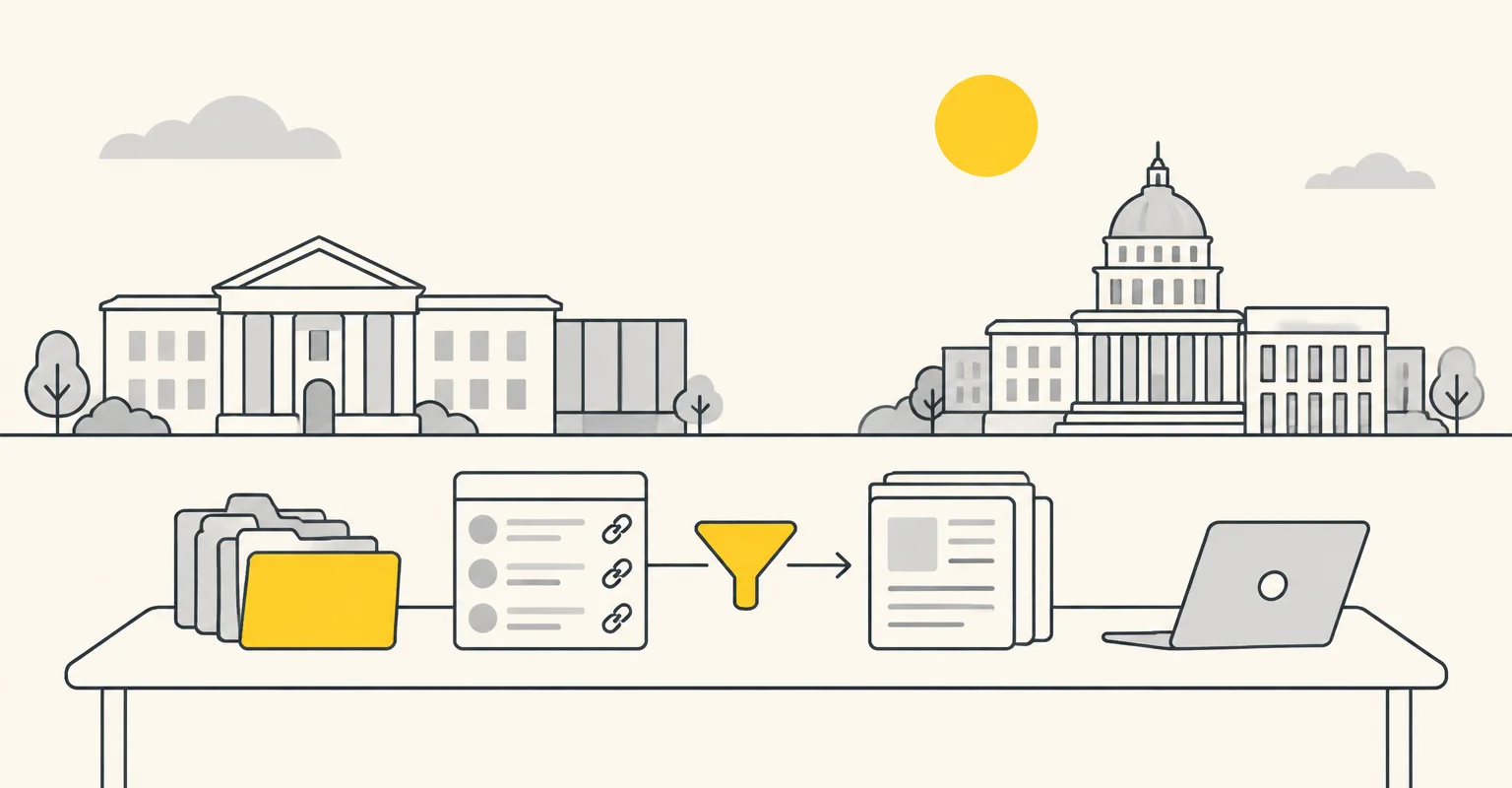
Bingham and Clester’s first-place workflow begins by profiling and cleaning data, then loading it into a database with links back to source records. They split discovery into two Agent Skills, a costly sweep and a cheaper everyday loop. The sweep sends a fleet of agents to design reusable SQL queries across different comparisons, while the daily loop screens candidates cheaply and repeatedly, filtering out weak leads before they reach an editor.
Their system then bundles promising leads into durable packages of hypotheses, evidence and logs that persist across sessions. Multiple agents are used to review findings and look for alternative explanations or holes in the evidence. External advisers were especially impressed that the modular design kept journalists in control of investigative judgment and token spending, and said the pattern could be reused in other newsrooms.
Muck, the second-place submission by Ulysses Pascal, combines an Agent Skill with a command-line tool for working through large document sets. It ingests many formats into a persistent index of structured data, including searchable text, entities, relationships, embedding vectors and findings.
Its design uses progressive disclosure. It starts with corpus summaries and representative samples, narrows candidates with keyword or semantic search, and only then retrieves full documents or passages when needed. Notes persist across sessions, citations include a document identifier, character range and hash, and the workflow includes reusable playbooks for common investigations such as revolving doors or foreign influence.
Registry Nako, the third-place submission by Nataliia Kobylchak, breaks the investigative process into nine narrow skills, each paired with a Python command-line tool. The workflow first cleans datasets by converting them into standardised tables and logging malformed records for review.
It then looks for overlaps between lobbying and congressional messaging, and for potentially missing disclosures. The agent is used mainly to coordinate and interpret those steps, which reduces the amount of raw data the model has to process. Case files collect the leads and source links, and a final verification tool recomputes every reported total and shows the formula behind it.
The organisers said the challenge is meant to demonstrate the viability of AI agent workflows and encourage sharing among journalists. The project has also published an open-source library of the winners’ workflows and a selection of other submissions. A panel discussion with the winners is scheduled for 2 and 3 October at the Computation + Journalism Symposium just outside Chicago at Northwestern University.