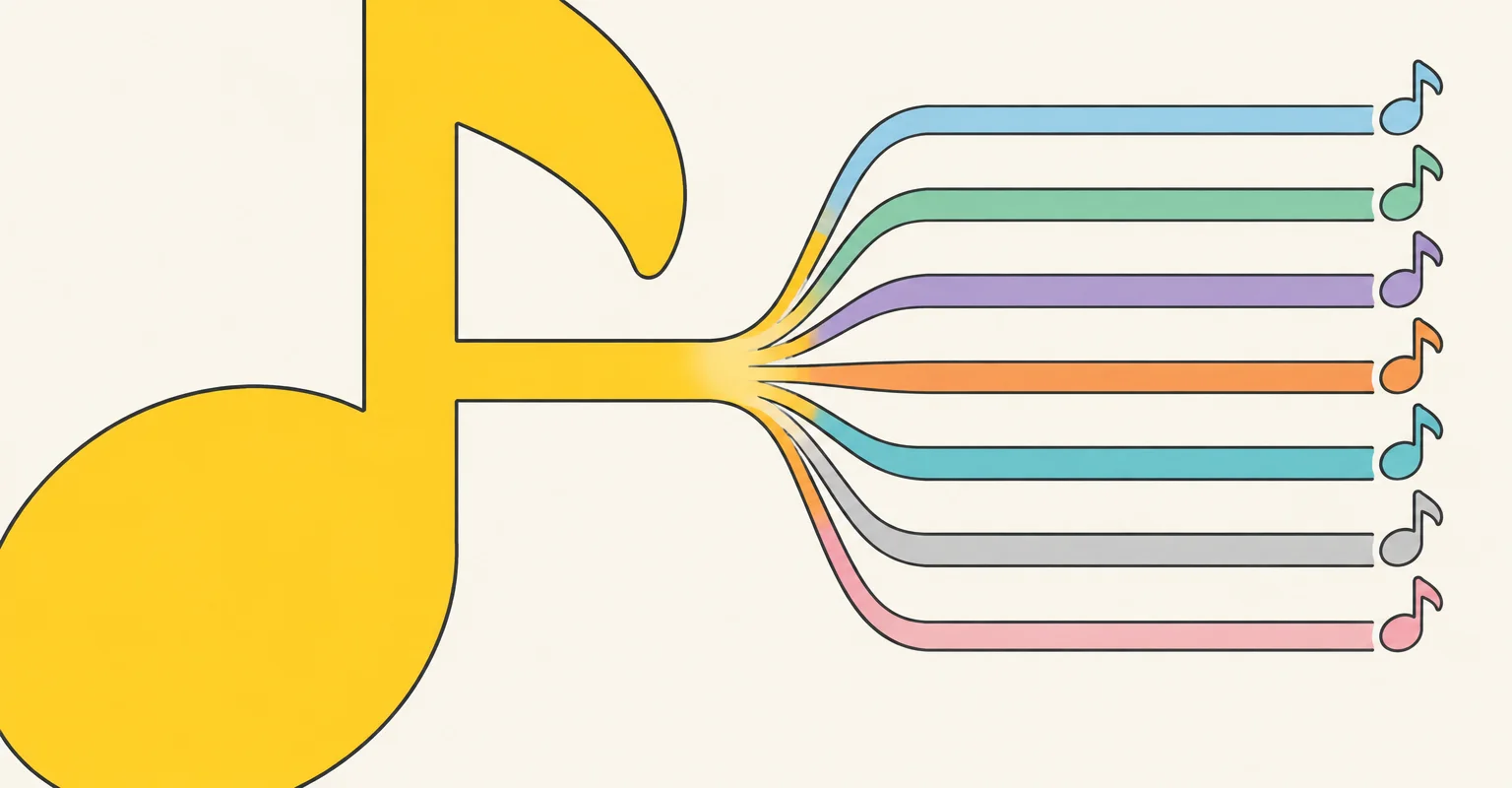
Francoobla Music proposes MAJESTATIS SEVEN method for comparing songs and lyrics
The company says its two-criterion framework is a discussion tool for AI-era originality, not a legal test for infringement.
Francoobla Music has unveiled MAJESTATIS SEVEN, a proposed methodology for comparing musical compositions and written lyrics by identifying defined sequences of matching elements. The framework sets out two criteria intended to provide structured reference points for examining similarities between creative works, including material made through traditional or AI-assisted methods.
The company presents the approach as a contribution to discussion of originality, authorship, copyright protection and generative AI in creative industries. It has invited music-industry representatives, intellectual-property professionals and AI developers to evaluate it.
MAJESTATIS SEVEN is not presented as an established legal test for plagiarism or copyright infringement. Any legal finding would remain governed by applicable copyright law and the circumstances of the individual work. That distinction is significant because music-infringement cases generally require courts or juries to assess substantial similarity, rather than simply count shared features.
A legal overview by CLL says an infringement claimant must establish that a second song shares original, protectable musical elements, rather than commonplace ones. Courts have considered factors including chord progressions, harmonic rhythm, lyrics, themes, rhyme structures, melodies, scale degrees and ostinatos. The overview says substantial similarity usually requires more than a few common elements and depends on the totality of the factors.
The new framework forms one half of Francoobla Music's two-part international initiative concerning human creativity, artificial intelligence and intellectual property. The other is the proposed International Friendly Musical Challenge Between AI and HI, a competition intended to explore how musicians might use AI-assisted production while retaining artistic control over arrangements, instrumentation, rhythm, composition and vocal interpretation. Its participation rules, evaluation criteria and timing have not been announced.
Francoobla Music was founded by the Italian musician and composer Franco Oblatore, who says he has 60 years of musical experience and has built a human-directed AI catalogue since 2023. He says the catalogue contains about 200 original tracks across multiple genres and has invited the industry to assess its development from 2023 to 2026.
The proposal appears against a continuing policy debate over AI and copyright. The U.S. Copyright Office began examining the subject in early 2023, including copyright in AI-generated works and the use of copyrighted works in AI training. Its August 2023 notice of inquiry drew more than 10,000 comments, and the office subsequently issued reports on digital replicas in July 2024, the copyrightability of generative-AI outputs in January 2025, and a pre-publication third instalment in May 2025.