Hannibal Books publishes first Dutch-language Refik Anadol monograph
The bilingual volume follows “Latent City,” using Bruges archives and live data to examine AI, authorship and artistic memory.
Hannibal Books has published “Refik Anadol,” an eponymous monograph described as the first Dutch-language book devoted to the Turkish-American new-media artist. The €39.95 volume accompanies “Refik Anadol. Latent City,” the inaugural exhibition at BRUSK gallery in Bruges, and is bilingual in English and Dutch.
The publication places the Bruges project within Anadol’s wider career, tracing relationships between artist and city, archive and imagination, and human history and technology. It includes forewords by Bruges Mayor Dirk De fauw, culture alderman Nico Blontrock and Musea Brugge director Kristl Strubbe, as well as conversations with the Musea Brugge curator Michael Dewilde and the architects Paul Robbrecht and Olivier Salens.
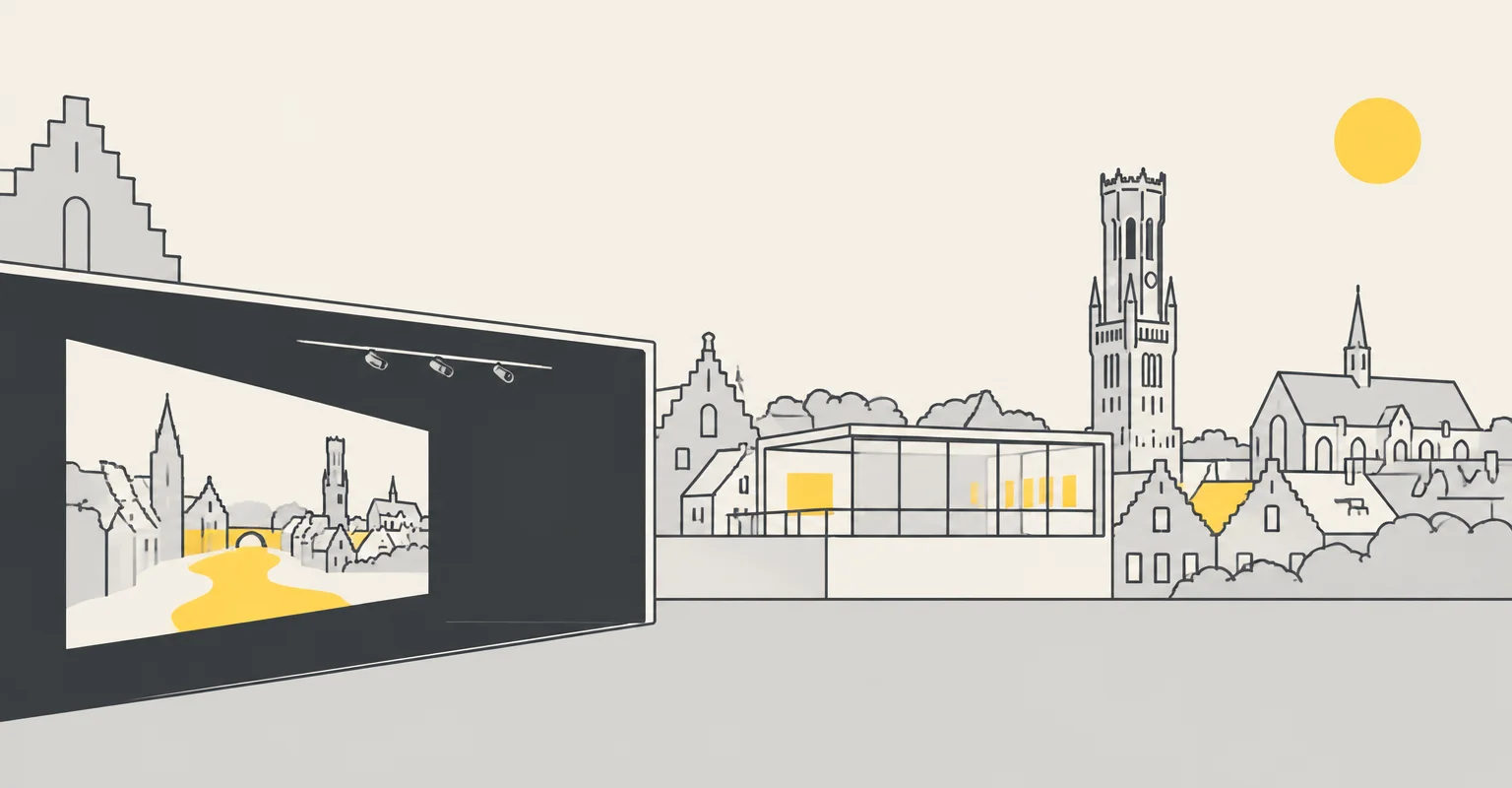
At the centre is Anadol’s use of machine learning, algorithms and artificial intelligence to turn city records into evolving visual installations. “Latent City” draws on Bruges architecture, weather, museum collections, public photographs and other sources to form what the book characterises as a living, sculptural image of the city.
The Bruges dataset includes paintings, sculptures and historical documents from Musea Brugge, material from the City Archives and publicly available forums, alongside real-time atmospheric data. Anadol’s custom models process millions of data points, continually reinterpreting the material through what he calls a computational “thinking brush.”
The title refers in part to latent space, the neural-network representation of high-dimensional data that captures hidden patterns in a dataset. Anadol has said that cities preserve traces of human imagination beyond individual perception, and that his work seeks new ways to sense them through machine intelligence.
The book also foregrounds the conditions under which that intelligence is used. It addresses ethically sourced archives and authorship in AI art, while presenting technology as a means to extend human perception, imagination and expression rather than replace them. Anadol said he wanted to offer a constructive vision grounded in responsible uses of AI; his practice also uses renewable-energy-based cloud infrastructure and works with humanitarian organisations.
Anadol began experimenting with code at eight by modifying games on his family’s Commodore computer. In 2008, he began projecting large images outdoors to create an illusion of movement, an approach that led him to use light as a material, data as pigment and the term “data painting.”
Although Bruges is the book’s anchor, it also presents works made through similar methods for Berlin, Stockholm, Portland, New York City and Seoul. The BRUSK exhibition, which opened May 8, runs through Nov. 8.