Jordan Rudess brings jam_bot improvisation to MIT stage
Two Future Fest concerts paired the Dream Theater keyboardist with an AI system trained on his playing and student performers.
Jordan Rudess, the Dream Theater keyboardist, gave two concerts at MIT’s Thomas Tull Concert Hall on Oct. 3 as part of the inaugural MIT Future Fest, presenting a live human-AI improvisation project developed with the university’s Media Lab.
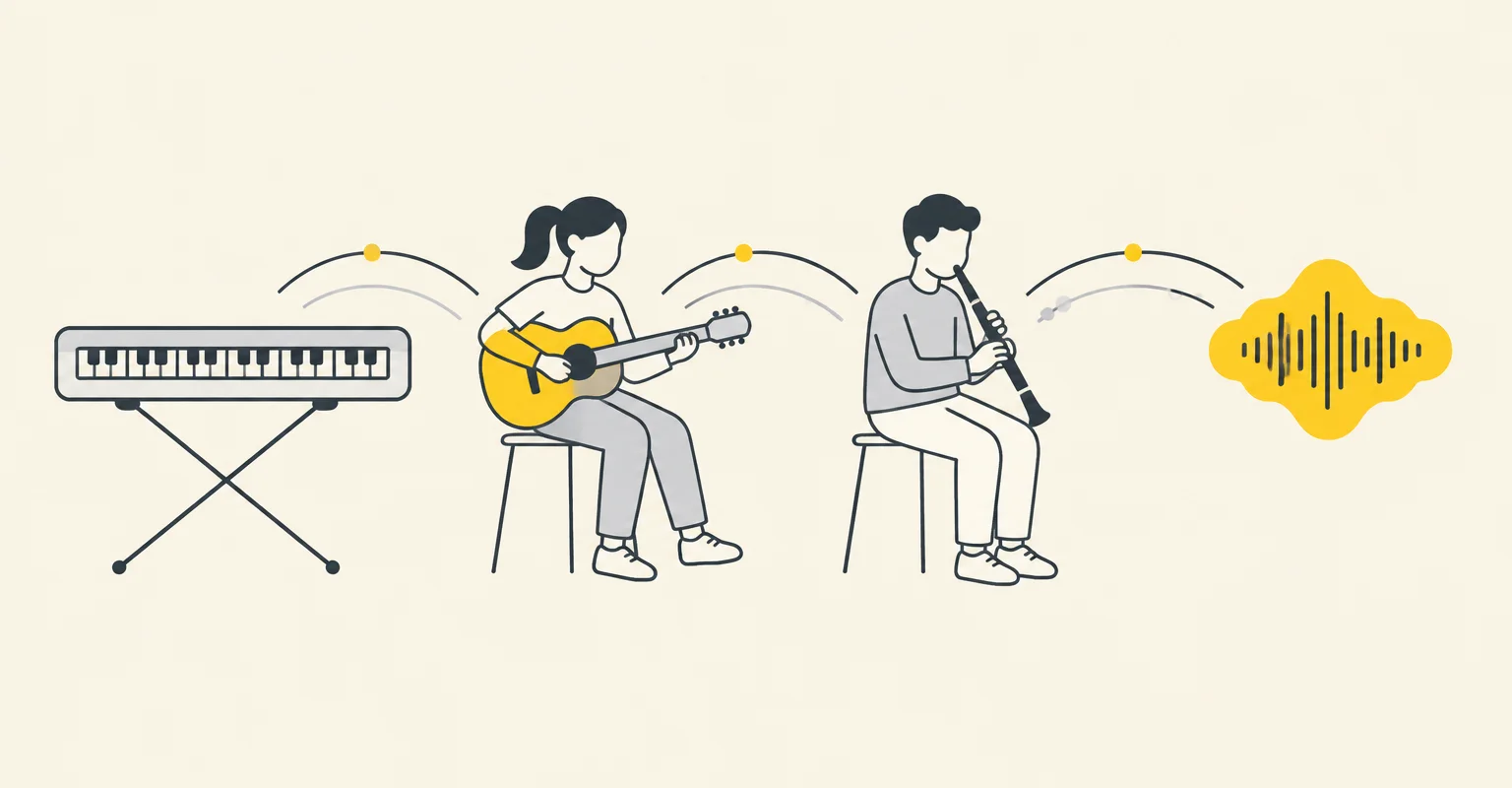
The shows included the world premiere of Rudess and jam_bot improvising with student musicians. The system generated musical material in real time for performers onstage, while also listening and responding to Rudess’s playing. The program ranged from Baroque counterpoint to progressive rock and was built around live improvisation.
The performances had been announced as featuring the MIT Chamber Chorus alongside guest student performers. Although each concert was planned around the same program, the improvised format meant the two shows would not be identical.
jam_bot is a generative music system trained on Rudess’s playing, created to support real-time co-created improvisation rather than replace performers. Rudess said the prospect of having a choir or ensemble respond to an idea played in the moment opened “a whole new world of creative possibilities.”
The MIT Media Lab’s Responsive Environments group developed the project with Rudess. Lancelot Blanchard, Perry Naseck and Professor Joseph A. Paradiso built the system, and the developers have worked continuously with Rudess since 2023. The project was developed during his Center for Art, Science & Technology Distinguished Visiting Artist residency.
Its models were first pretrained on an academic dataset of musical transcriptions, then fine-tuned with performances Rudess recorded specifically for the project. The Media Lab describes jam_bot as designed around one musician’s playing to extend what he can create and perform live, rather than as a general-purpose tool trained to imitate a catalogue of artists.
Technically, the system adapts symbolic music language models for distinct musical roles by changing context and conditioning signals. Its low-latency, multithreaded setup listens to performers, prompts models and schedules their generated output for performance in real time.
The Oct. 3 concerts were not jam_bot’s first public appearance. Rudess performed with the system and violinist Camilla Bäckman at the MIT Media Lab in September 2024, in a show that also used a kinetic sculpture responding to jam_bot’s contributions. That earlier project described the human-computer relationship as “symbiotic virtuosity.”
The new event arrived amid a broader rise in performances involving generative agents, according to MIT Media Lab researchers. Their work on musician-AI improvisation has found that musicians tended to rein in the systems’ wilder qualities, while some audience members expected room for substantial AI agency and spontaneity. Musicians have also called for practice and a willingness to embrace uncertainty in working with such systems.