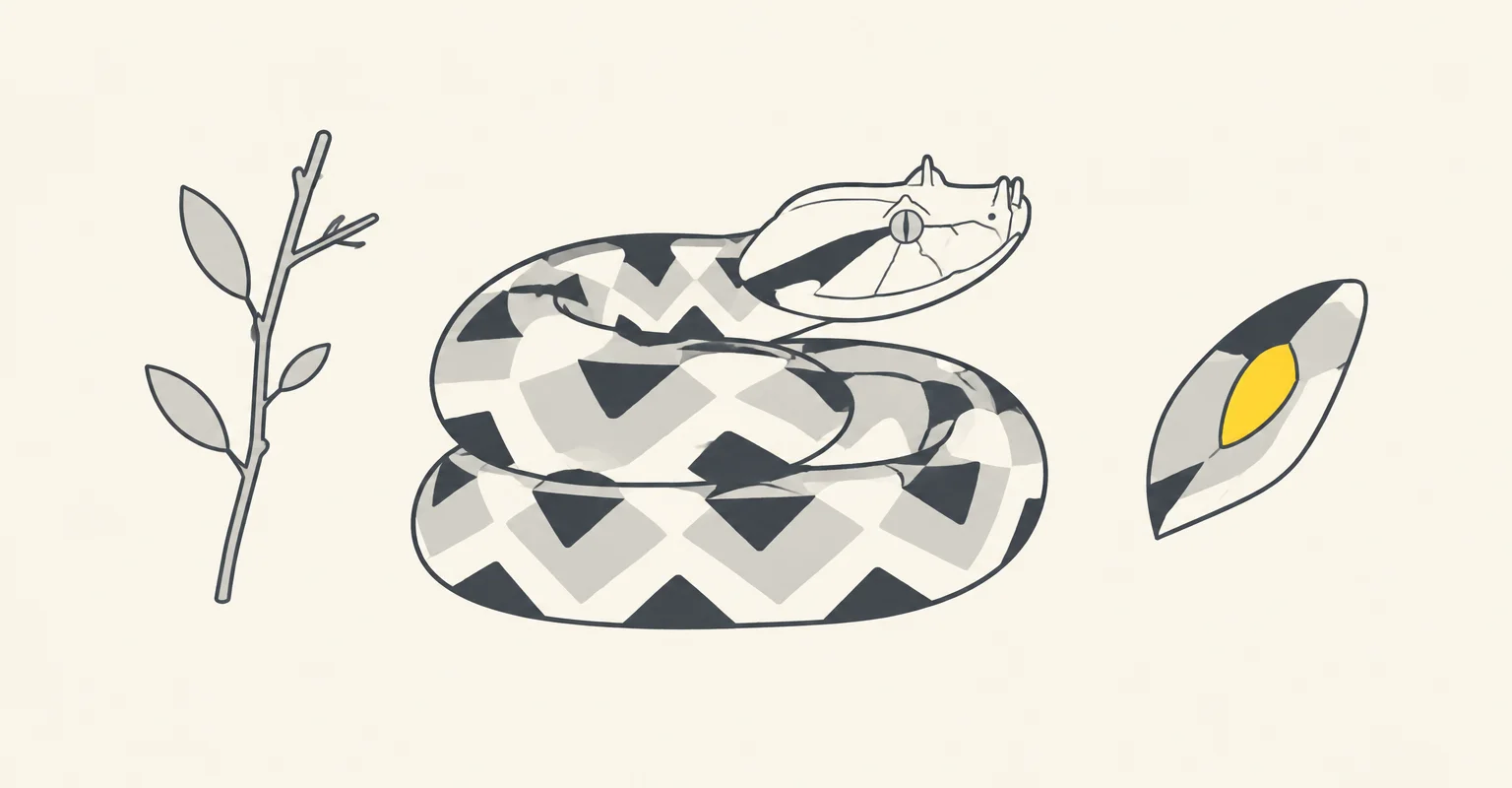
Santa Ana snake hoax exposes limits of AI image detection
Conflicting software results could not immediately settle whether a supposed Gaboon viper was real, as police mounted a search
A fabricated image of a Gaboon viper sent Santa Ana police and reptile specialists searching for a reported snake and left residents fearing that a highly venomous animal might be loose in their neighbourhood, underscoring how difficult it can be to authenticate convincing AI-generated imagery in an emergency.
Police announced the reported sighting on Monday, Sept. 28. The man who made the report later admitted that both the image of a snake in a tree and the emergency report were false, according to the Santa Ana Police Department’s account quoted by The Mercury News.
For roughly 24 hours, residents believed a highly venomous snake might be loose in the neighbourhood. Some parents kept their children indoors, and one woman called police in alarm after finding a different snake that was not a Gaboon viper.
The search was not immediately dismissed as a prank. Gaboon vipers are native to sub-Saharan African rainforests and savannas, are highly venomous, and may weigh more than 45 pounds. Herpetologists told the Los Angeles Times that the ground-dwelling snakes would not be supported by the thin branch shown in the image, while experts also noted an apparent external ear, which snakes do not have.
Investigators found no local holder of the specialised California Department of Fish and Wildlife permit required to keep a Gaboon viper. But droppings in the backyard and shed could have been consistent with the species, so officers and herpetologists continued to search the area despite early doubts about the photograph.
The episode also showed that software could not give police a definitive answer. Officers submitted the image to AI-detection programs and received conflicting results: one publicly available tool labelled it AI-generated and another deemed it legitimate. Separately, OpenAI’s photo-verification tool classified the image submitted by news organisations as AI-generated or AI-enhanced.
Dr. Karen North said currently available verification systems are not wholly accurate. In her own testing, some essays written entirely by people were labelled 100% AI by a detection system. The University of San Diego Law Library similarly says studies have found detectors neither accurate nor reliable, with both false positives, which mislabel human work as AI, and false negatives, which miss AI-produced material.
Google and OpenAI have released image-verification tools based on SynthID watermarks. The technology embeds marks in generative-AI content intended to be invisible to people but readable by SynthID technology. North said the system estimates the likelihood that material was AI-produced rather than directly detecting AI use.
OpenAI has said false positives in its photo-detection software are rare, but acknowledged that removing metadata or degrading a SynthID watermark can lead to a false negative. The company also said its verification tool works only on material made with OpenAI products, a constraint when the origin of a disputed image is unknown.
Santa Ana police initially did not plan to seek charges. After the admission, authorities began preparing a case recommending a charge of making a false report of an emergency; the man had not been charged or taken into custody as of Thursday morning. A misdemeanor conviction could carry a sentence of up to one year in jail.
The case fits a broader policing problem involving fabricated visual evidence. In October 2025, Salem, Massachusetts, police warned residents about a TikTok prank using AI-generated images of supposed home intruders after calls about break-ins that had not occurred.