Chicago musicians call for streaming blackout over AI-generated music
Artists urged listeners to avoid Spotify and Apple Music for two days as they pressed for safeguards for human-made work.
Chicago musicians have called for listeners to avoid streaming services including Spotify and Apple Music on Oct. 26 and 27, escalating a campaign against AI-generated music that they say is built from music scraped from across the web.
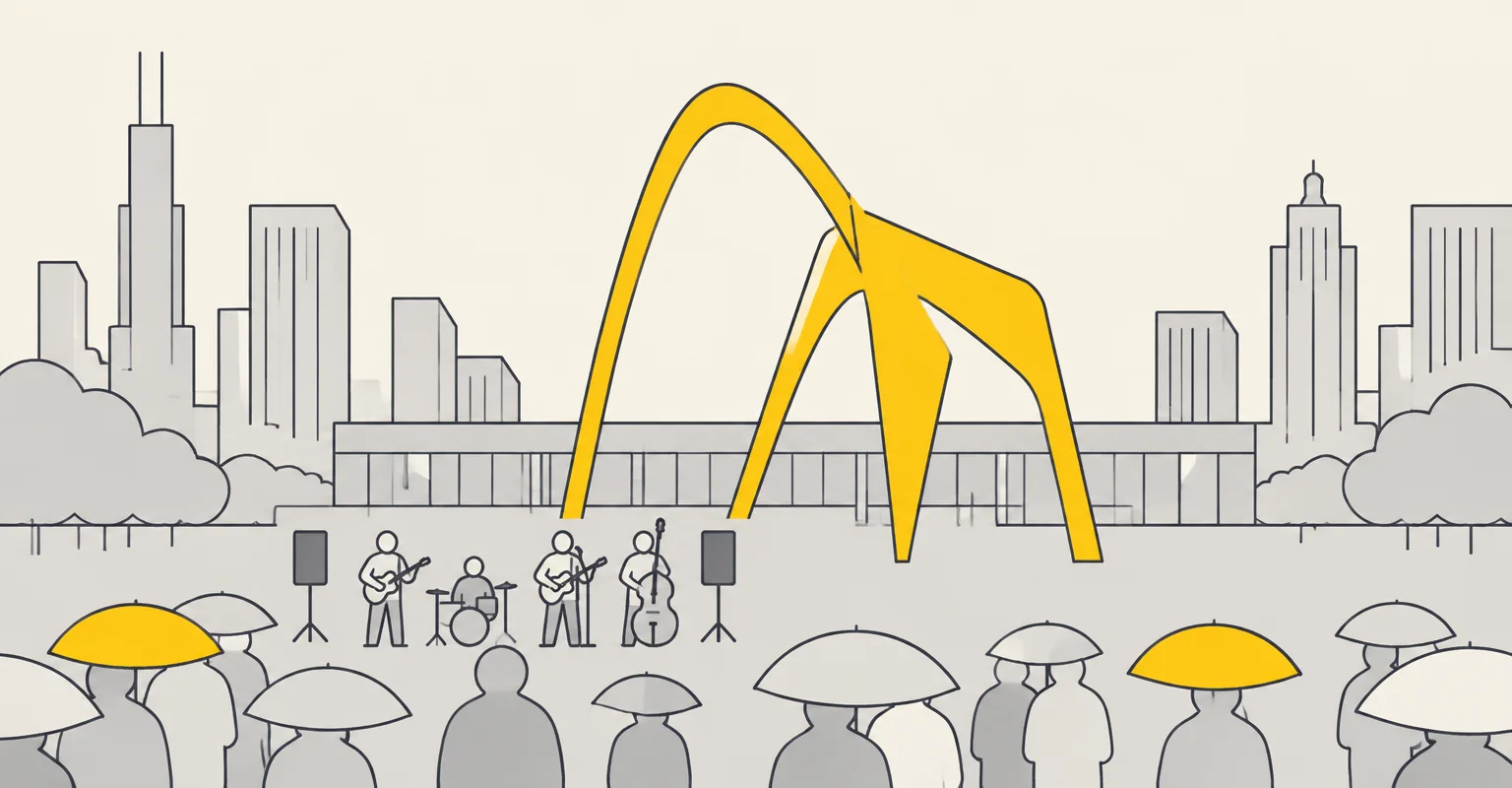
At a rain-soaked rally beneath Alexander Calder’s Flamingo sculpture on Thursday, roughly 20 artists demanded legal safeguards against AI-generated copies of their work. They described the proposed two-day streaming blackout as the next stage of a broader push for AI regulation in music and support for human artists.
Participants wore shirts saying, “Human music only. Press pause on AI,” sang “Don’t give up the fight” and chanted “Pause AI!” The Chicago Tribune reported that the musicians argue generative systems draw on music scraped from across the web, amounting to the appropriation of decades of recording work.
Their demands also focused on streaming platforms. Rally participants said services have been too slow to address AI fakes of real artists and have, in some cases, welcomed AI-generated material.
Melody Angel called for rules that let musicians distinguish “fake music” from “real music.” Jeannie Tanner said artificial music was polluting creative careers and making human-made work harder to find, while Ugochi Nwaogwugwu said that being a musician was “an earned position.”
The question of what material trains generative music systems remains legally unsettled. The World Intellectual Property Organization says systems including Suno and Udio can create music from text prompts within seconds and are trained on pre-existing human-made music. Neither company has disclosed its training data or model details, the article said, raising questions over copyright and compensation.
The Recording Industry Association of America’s lawsuits against Suno and Udio in June 2024 illustrate that uncertainty. The article argues that commercial generative-AI systems should license music datasets unless courts decide copyrighted music can be used freely for training. It also identifies similarity analysis and dynamic attribution as potential ways to compensate artists whose work influences generated tracks.
Spotify has presented its own measures as protections against AI misuse. In September 2025, it introduced a policy permitting vocal impersonation only with the impersonated artist’s authorization, announced a filter aimed at suppressing music spam and backed an industry disclosure standard for AI credits developed through DDEX. The company said it had removed more than 75 million spammy tracks in the preceding 12 months and was receiving tens of thousands of AI-credit submissions a day through a beta disclosure feature.
Separately, nearly 70 local musicians signed an open letter saying they intended to leave Spotify over compensation, unlabeled AI music and data-collection concerns, according to WBEZ. Spotify said then that independent artists generated about half of the more than $10 billion it paid rights holders in 2024, and disputed claims that it sold user data to third parties.